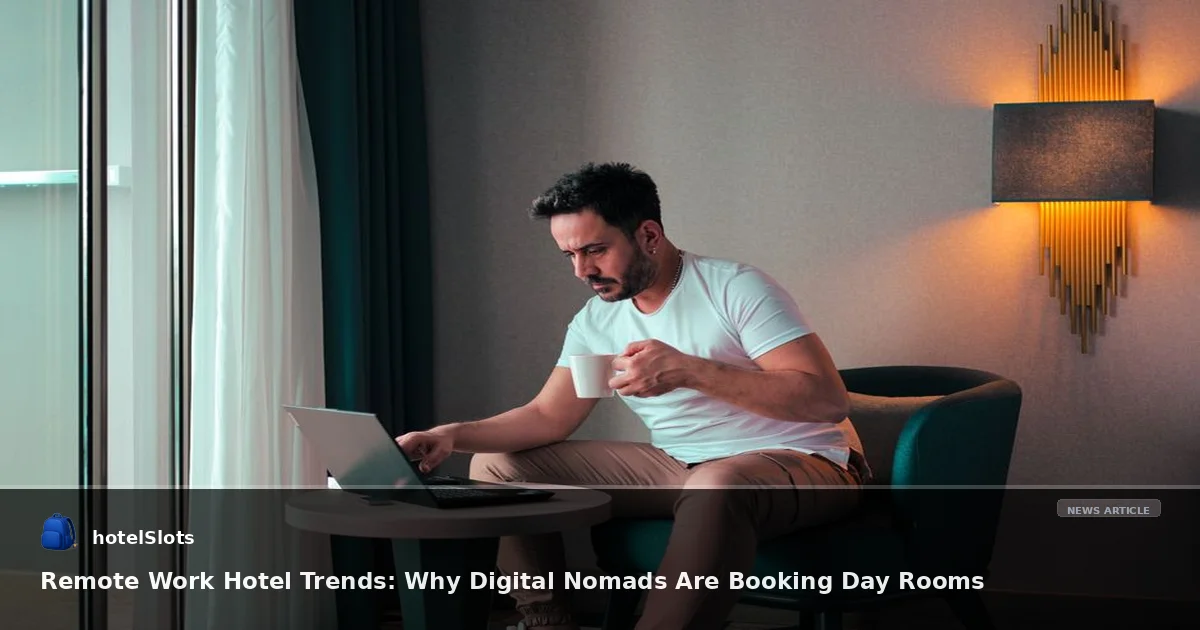
The remote work era has quietly rewritten the rules of where work happens. A few years ago, the word "office" meant a commute and a desk with your name on it. Today, a growing number of digital nomads, freelancers, and hybrid employees do their best work wherever a stable connection and a quiet room happen to be. That shift is driving one of the fastest-moving travel trends of the moment: the remote work hotel — a hotel room you book for the daytime hours you actually need, with no overnight stay required.
The idea is simple, and it is spreading fast. Coffee shops are noisy, seats fill up by mid-morning, and the power outlets are always taken. Home offices blur into living rooms and household chores. A remote work hotel gives you the focus of a real workspace without any of the overhead, and booking one now takes about as long as ordering that second latte.
Why Coffee Shops and Home Offices Fall Short
Working from a café looks good in a photo and feels awful by hour two. Background noise leaks into every call, the Wi-Fi slows as the room fills, and there is an unspoken pressure to keep buying drinks just to hold your seat. At home, the distractions are different but just as real: dishes in the sink, a doorbell, and a partner on a competing call.
A day use hotel room removes all of it. You get a private, lockable space with a real desk or table, reliable high-speed Wi-Fi, a comfortable chair, and a bathroom that is actually yours. For the price of a few café visits, you trade interruptions for uninterrupted output.
What a Remote Work Hotel Day Room Includes
Booking a remote work hotel by daytime time slot does not mean a downgraded room. You get the same room any overnight guest would use, just for the part of the day you need it. Depending on the property, a typical day use room includes:
- A comfortable bed for a mid-day reset or power nap
- A private bathroom, so you can shower before an evening event
- High-speed Wi-Fi and plenty of power outlets for your devices
- A quiet, climate-controlled space with a real workspace
- On-site amenities such as a fitness center or pool, where available
How Day Use Time Slots Work
The biggest difference between a remote work hotel and a traditional booking is the clock. Instead of paying for a full night, you reserve a daytime slot — morning, afternoon, or a full day — that lines up with the hours you plan to work. You check in at the start of your slot, settle into a quiet room, and check out when your block ends.
That structure is exactly what makes day use rooms so useful for remote workers. A developer in town for meetings can book an afternoon slot between calls. A traveling writer can reserve a full-day block to finish a deadline. There is no overnight commitment and no waiting for a standard check-in time.
What to Look for in a Remote Work Hotel
Not every property suits focused work equally. When you compare day use hotel rooms, keep a short checklist in mind:
- Wi-Fi quality: Look for properties that mention business-grade or high-speed internet.
- Desk space: A real table and chair beat a bed and a laptop every time.
- Location: A hotel near your meetings, a client site, or the airport cuts travel time.
- Slot flexibility: Morning, afternoon, and full-day options let you match the room to your workload.
- Amenities: A gym, pool, or lounge can turn a workday into a small daycation when you finish early.
How Digital Nomads Book a Day Room
The booking flow is deliberately simple, because nobody wants a lengthy form when a deadline is waiting. Start by searching day use hotel near me to see available properties, then compare day use hotel rates across the day's time slots. Pick the slot that fits your schedule and complete the booking form right on the homepage.
If you are new to the concept, the how day use hotel slots work page walks through the full flow. And because hotelSlots.org is built around daytime time slots rather than overnight reservations, you only pay for the hours of focused work you actually use.
The Bottom Line on Remote Work Hotels
The remote work hotel trend is not a passing fad — it is a practical answer to a problem every remote worker knows. Work requires focus, and focus requires space, quiet, and a dependable connection. Coffee shops offer none of those reliably, and home offices offer them only sometimes.
A day use room hands you all three on demand. The next time a café feels more like a call center than a workspace, skip the line for the corner seat and book a day room instead. Your productivity — and your next video call — will thank you.